


Aleister Crowley may be perceived by some as a controversial figure, to say the least, but what cannot be denied about him is that he was deeply familiar with the content of secret societies of the nineteenth and early twentieth centuries, such as the Golden Dawn. He joined the Golden Dawn Order in 1898, founded Argenteum Astrum (Silver Star) in 1907, and joined the Ordo Templi Orientis in 1910.
These orders did not come out of nowhere. What they taught was the wisdom of the ancient mysticism of Egypt and ancient Greece, broadly connected to the Eleusinian Mysteries. Why were they secret? Mainly because this knowledge was not seen as meant for everyone — originally only for the initiates and people regarded as trustworthy — but also because it has been seen as a threat by people in power — to their power.
What these orders have in common is that they were the guardians of the ancient wisdom on how to initiate and lead individuals into a structured path of spiritual evolution, leading ultimately to union with the Divine, whether we call that God, the True Self, the Holy Guardian Angel, or the Absolute.
This unification is dangerous and threatening to some of those in power on Earth simply because it bypasses them by connecting directly to the highest authority itself, skipping through layers and layers of structures built mostly on wrong deeds.
Therefore, to help those who wish to be guided by what Crowley called “True Will” — one’s own will but ultimately aligned or shaped by the Divine will — I present below the levels towards Enlightenment with my own commentary based on my own experience mapping it back through the ladder.
Encouragement: Anyone with enough determination can achieve spiritual enlightenment and divine union. The steps below, drawing from secret orders and societies tracking back to ancient Egypt and hidden in secrecy across millennia, should make it easier to provide any student with a framework on how to do it in steps.
Structure of the Path
The AA (Argenteum Astrum) outlines a spiritual order and training system for seekers striving toward Enlightenment, mystical union, and ultimate realization of the Supreme Self or God.
It is divided into three main Orders, each representing a major phase of spiritual evolution:
The Outer Order (Golden Dawn)
Goal: Mastery of self, purification, and preparation for inner contact.
Student: In theory not a level, but a starting point, you begin by studying core spiritual, philosophical, and occult texts. The aim is to awaken curiosity, open the mind, and prepare for personal responsibility in spiritual practice.
Probationer (0º = 0□): You begin your own spiritual work: journaling, observation, and building daily discipline. It’s about learning how to follow through, observe yourself honestly, and build consistency.
Neophyte (1º = 10□): You start to work with your energy body, developing basic concentration and practicing rituals that shift your awareness beyond the material world. You start sensing the unseen.
Zelator (2º = 9□): Focus is on mastering the physical self. You work on health, posture, breath control, and begin meditation. You build the foundation of bodily awareness and energy control.
Practicus (3º = 8□): Your work centers on the mind. You dive into Qabalah, understanding symbolic systems, archetypes, and inner maps of consciousness. You begin to mentally order the spiritual universe.
Philosophus (4º = 7□): You examine your emotional nature and how desires shape your choices. You learn to transmute passions and align your heart with your higher purpose.
Dominus Liminis: This is a threshold grade. You begin serious meditative work, training the mind in deep one-pointed focus (dharana), preparing for entry into deeper spiritual contact.
Vlad’s commentary
I owe most of my early path to a couple of things. When I was a teenager until my mid-twenties, I spent quite a lot of time in the rave counterculture. Dancing was my earliest meditation. Later, near my thirties, I did a lot of running and realized there was a rhythm in that too. In my thirties, thanks to a rediscovery of ancient sacraments — the Eleusinian sacrament of the grain fields, the Mexican sacraments, and the jungle sacraments, both floral and faunic and they lifted meditation to a whole new register.
I also owe a lot of insights to traveling and living abroad. One can really see patterns once one is removed from their native environment, and it’s a big learning. Eight months in London, six months in Istanbul, a year in Ecuador, months in Basel, India, Nepal, and many other places for a shorter period of time. It really helps one on this journey towards wholeness.
But at the beginning, one has to be curious; without curiosity it’s impossible to learn anything. In my early work, Alan Watts and his Out of Your Mind lectures helped me a lot to spark curiosity. Later, I remember a moment when running in a park, I felt this “mini-satori” which gave me a glimpse of interconnectedness. I stopped, and I was watching dogs running in the park, jumping, and children playing as if it was magic. That marked my Neophyte degree.
In late 2017 I started seeing deeper patterns, and I started studying various spiritual paths in depth. I’ve done hundreds of interviews with people, understanding their goals, desires, needs, and frustrations. It helped me identify common patterns in people, their motivations, and common needs. I observed what people do and why. It helped me bridge the Philosophus level.
On the threshold level I leaned on a certain bard’s counsel about “heroic portions” of the Mexican sacrament taken in silent darkness and on classic guidance about mindset and milieu, studying the inheritance of the 1960s counterculture in detail. I had questions, and I started receiving answers.
From The Why, How, and What of Existence book:
- The opening epigraphs and introduction frame the Student/Probationer stance as beginner’s mind and compassion, inviting readers to “admit we do not know” so the right problem can be found and the unimaginable envisioned. This aligns with early grades focused on curiosity, humility, and disciplined attention.
- The “How” chapter connects big-vision imagination with practical action. For Neophyte to Practicus, it presents symbol, mapping, and design as ways to order mind and reality through focused intent and iterative practice.
- The Hermetica passage is used to teach an inner posture for Dominus Liminis: expand to the infinite while also knowing the zero/void. Readers are invited to hold both extremes as a gateway to deeper contact.
The Inner Order (Rosy Cross)
Goal: Union with the Holy Guardian Angel, confrontation with the Abyss.
Adeptus Minor (5º = 6□): You achieve a conscious relationship with your Holy Guardian Angel, the divine presence within you that reveals your True Will. You live from your inner guidance.
Adeptus Major (6º = 5□): You start embodying your True Will, integrating spiritual insight into daily life. You remain centered regardless of outer chaos. It’s the stage of true maturity.
Adeptus Exemptus (7º = 4□): Having achieved great knowledge and balance, you must now let go of all pride and attachment. You prepare for ego-death, recognizing that all personal attainments are illusions.
Babe of the Abyss: You step into the unknown. Everything you believed yourself to be is stripped away. It’s a dark night of the soul, terrifying but essential. Only surrender allows rebirth.
Vlad’s commentary
I owe most of my experiences at this stage to deep contemplative practice paired with initiatory sacraments taken with utmost reverence. In those highest passages, rebirths unfolded, a sense of former lives surfaced, and the cyclical nature of existence became unmistakable — until surrender and union with the Absolute dawned.
My mind changed, and I started seeing through the lies of societies and cultures and their hypocrisy. I started seeing how, from the pure truth, through thinking and doing, it becomes more and more impure. Great books inspired me — Zen Mind, Beginner’s Mind by Shunryu Suzuki and Tao Te Ching by Lao Tzu. Be Here Now by Ram Dass was my daily guide.
I started gaining insights from both my experiences and literature. I got in contact with non-corporeal entities that offered skills, knowledge, and help I needed for my next steps. I will never forget when I once met entities offering me help, and I accepted it; they taught me to pay attention, to observe, and to focus on multiple things at once. The experience wasn’t that nice at first because they were talking to me from all directions and poking me until I fell asleep, but the next day I felt anew, with new curiosity in mind.
It certainly helped me greatly in my work as a researcher, where observation of human behavior is fundamental. I went to the rainforest in Ecuador and drank the jungle’s floral sacrament — the old vine — under the songs of the night. I worked with the jungle’s faunic sacrament, whose teaching arrives like a thunderclap. This is as near to ego-dissolution as one can responsibly approach.
From The Why, How, and What of Existence:
- The “Why” chapter presents a direct dialogue with the Supreme Self, culminating in Sat-Chit-Ananda and Tat Tvam Asi realizations. Readers see a clear portrait of Adeptus Minor union and the birth of True Will as Love.
- The ethical axis of Will is stated plainly: “Love is the only worthy guide, without which nothing is truly done.” This points to Adeptus Major embodiment of guidance as loving conduct in the world.
- Accounts of Heaven/Origin and Hell, followed by surrender, anticipate Adeptus Exemptus detachment and the Babe of the Abyss ordeal, showing readers how identity dissolves before a deeper rebirth.
The Secret Inner Order (Silver Star)
Goal: Transcendence, divine union, liberation from duality.
Magister Templi (8º = 3□): You become a vessel of silence, truth, and divine wisdom. Personal will is dissolved in the divine. Your very presence becomes transformative.
Magus (9º = 2□): You speak a Word, a magical formula that uplifts the world. You shape culture through divine expression, and your life becomes a mythic teaching.
Ipsissimus (10º = 1□): You transcend identity entirely. No separate self, no desire, no need. You abide in perfect stillness, unified with the All. The journey is over.
Vlad’s commentary
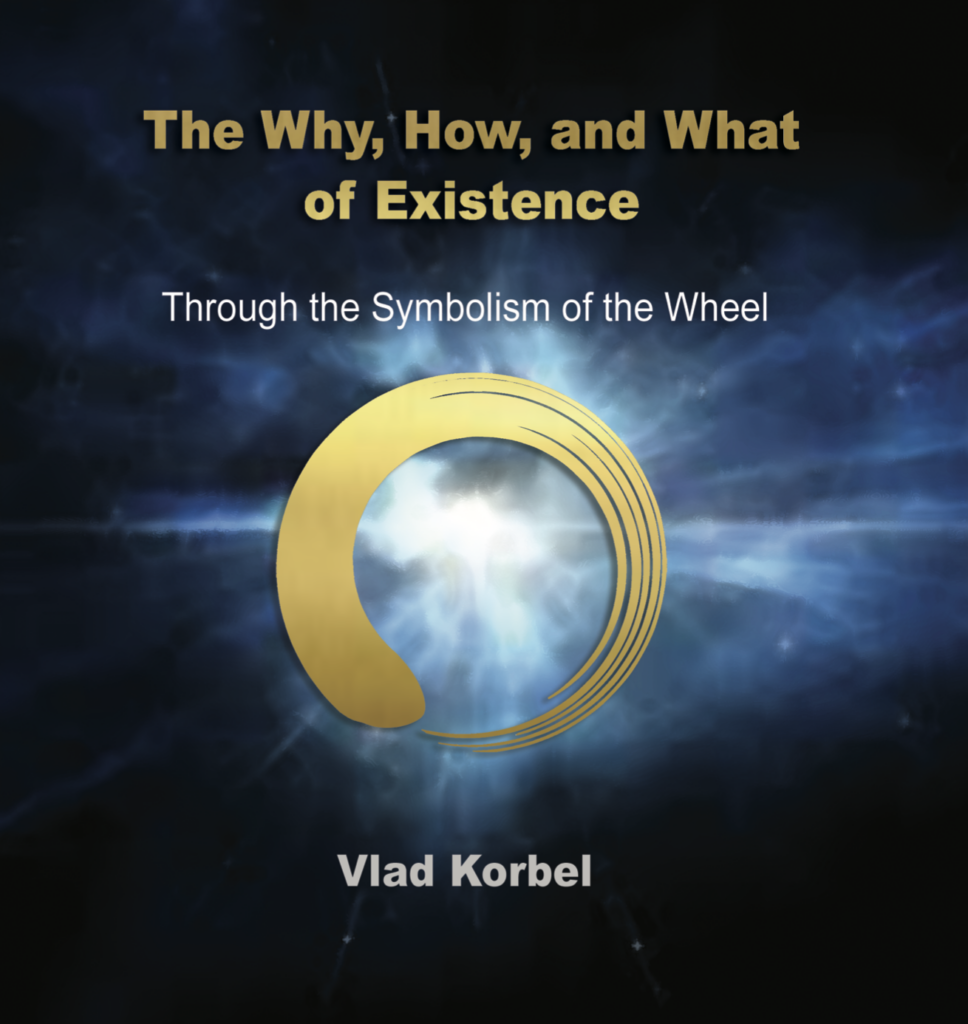
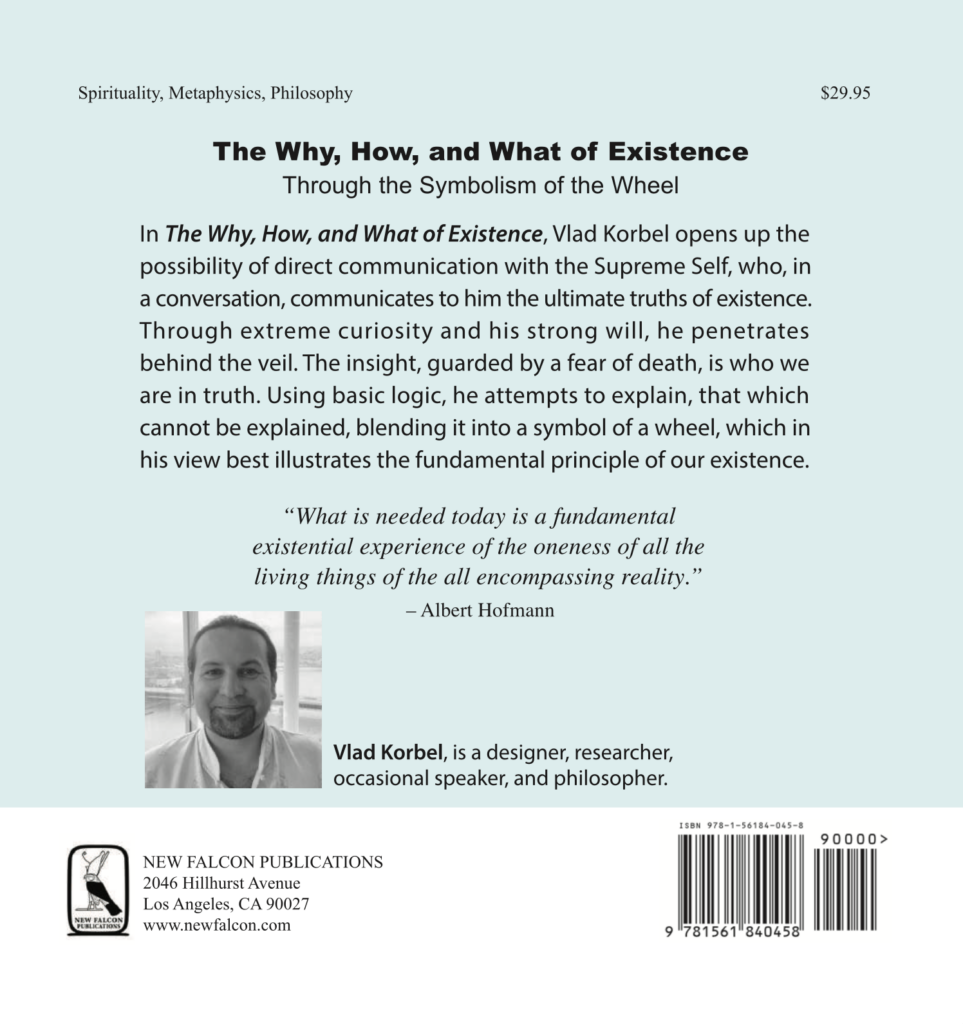
This period started while writing and once I published my book: The Why, How, And What of Existence: Through The Symbolism of the Wheel and hasn’t really ended yet. My goal, at this stage, is to help any fellow human being achieve the intellectual understanding of divine union through experiencing it themselves and uplifting the world by sharing this knowledge with anyone. The path of a bodhisattva. When “the journey is over” is when we die, but as this whole journey changed my perception of death entirely, there is no need to fear that one anymore.
“If you die before you die you won’t die when you die.” — epigram inscribed over a gateway at St. Paul’s Monastery on Mount Athos in Greece.
From The Why, How, and What of Existence:
- The “Who am I?” neti-neti (not this, not that) verses guide readers through identity deconstruction toward the Absolute, modeling Magister Templi emptying and pointing to Ipsissimus stillness.
- The becoming-a-“ray of light” scene shows transmission and recognition of oneness, a lived motif of the Magus who bears a Word that reveals unity.
- The closing quotations on Love (Paul, Einstein, Tagore, Dunoff) orient readers to speak and live that Word in culture, while “All consciousness is one / Om Namah Shivaya” gestures to Ipsissimus equanimity, pointing back to the beginning and the Why = Love, restarting the wheel again.
Two Critical Thresholds
The Angel: (Adeptus Minor stage) Union with the Holy Guardian Angel is essential. It is your divine core, your higher self, your God-within.
The Abyss: (Beyond Exempt Adept) To cross the Abyss is to let go of all that you are — your identity, attainments, ego — and become reborn as a pure vessel of divine will.
Core Crowley’s Teachings
- Every soul is a star, unique and divine.
- “Do what thou wilt” means discovering and living from your divine essence (True Will), not selfish desire.
- Love is the Law, but it must be guided by Will, the sacred purpose within each being.
- Enlightenment is a path of rigorous training, deep surrender, and courageous transcendence.
- The Order demands no worship or hierarchy, only that each member assist those behind them.
- The ultimate realization is that the human and the divine are not two. Beyond the Word and the Fool, beyond all opposites, the True Self — the Star — shines as one with the Light of God.
“Love is the law, love under will.” — Aleister Crowley
“If you seek a simple proof (of oneness), let it be that Light!” — Vladimir Korbel (Vlad)
Leave a Reply