The Mahabharata is best known for the war between the Pandavas and Kauravas and for containing the Bhagavad Gita. Many people know Arjuna and his story.
But, after the war, it enters one of its deepest philosophical sections.
In Book 12, the Shanti Parva, the dying Bhishma instructs Yudhishthira on dharma, renunciation, knowledge, and liberation. Its final division, the Moksha Dharma Parva, contains the story of Shuka, son of Vyasa, the sage traditionally associated with the Mahabharata.
Shuka seeks neither heaven nor supernatural power, but complete liberation. After receiving instruction from Vyasa and King Janaka, mastering his senses, and relinquishing attachment, he reaches the culmination of moksha.
The Supreme End of Shuka
“He cast aside the eight kinds of tamas, inertia and ignorance, and discarded the five kinds of rajas, activity and passion. The intelligent one also abandoned sattva, purity and harmony, and this was extraordinary. In that state, he was always without any qualities and was divested of all signs. He was like a blazing fire without any smoke and established himself in Brahman.
“By then, Shuka had become one with everything. He was in the soul of everything and faced every direction. The one with dharma in his soul replied in an echo with the sound of ‘Bho.’ All the worlds, with their mobile and immobile objects, replied loudly, resounding with the single syllable ‘Bho.’
“Having exhibited his powers, Shuka disappeared. He abandoned all the qualities, including the attributes of sound and the others. He attained the supreme end.
“Surrounded by gods and gandharvas, and worshipped by large numbers of maharshis, the illustrious Shankara, Shiva, arrived there with the Pinaka, his divine bow, in his hand. Mahadeva spoke these words of comfort to Krishna Dvaipayana, who was tormented by grief on account of his son:
“‘In earlier times, you sought from me a son whose valour and conduct would be like those of fire, earth, water, wind, and space.
“‘Because of your austerities, a son with such traits was born from you. He was pure and full of the energy of Brahman. This happened because of my powers. He has attained the supreme objective, one that is extremely difficult for someone who has not conquered his senses to obtain, even if that person is a god.’”
Mahabharata, Shanti Parva, Moksha Dharma Parva 12.320, Chapter 1648 in Bibek Debroy’s translation. (small explanatory edits by Vlad)
Beyond Perfection
The passage presents liberation as a sequence of relinquishments.
Shuka first abandons tamas, ignorance and inertia. He then abandons rajas, desire, passion, and restless becoming.
But the decisive step is the abandonment of sattva.
Sattva represents purity, clarity, harmony, and spiritual knowledge. Yet it remains one of the three gunas, the qualities of manifested nature. Even the purest state remains a state. Spiritual knowledge can still become an identity: “I am pure,” “I am enlightened,” or “I am a sage.”
Moksha is therefore not the perfection of the separate individual. It is freedom from the individual as a limiting centre.
Shuka becomes “divested of all signs.” Nothing remains through which he can be defined as this particular being rather than another. He is like a smokeless fire, consciousness without obscuration or separation.
From “I am not” to “I am”
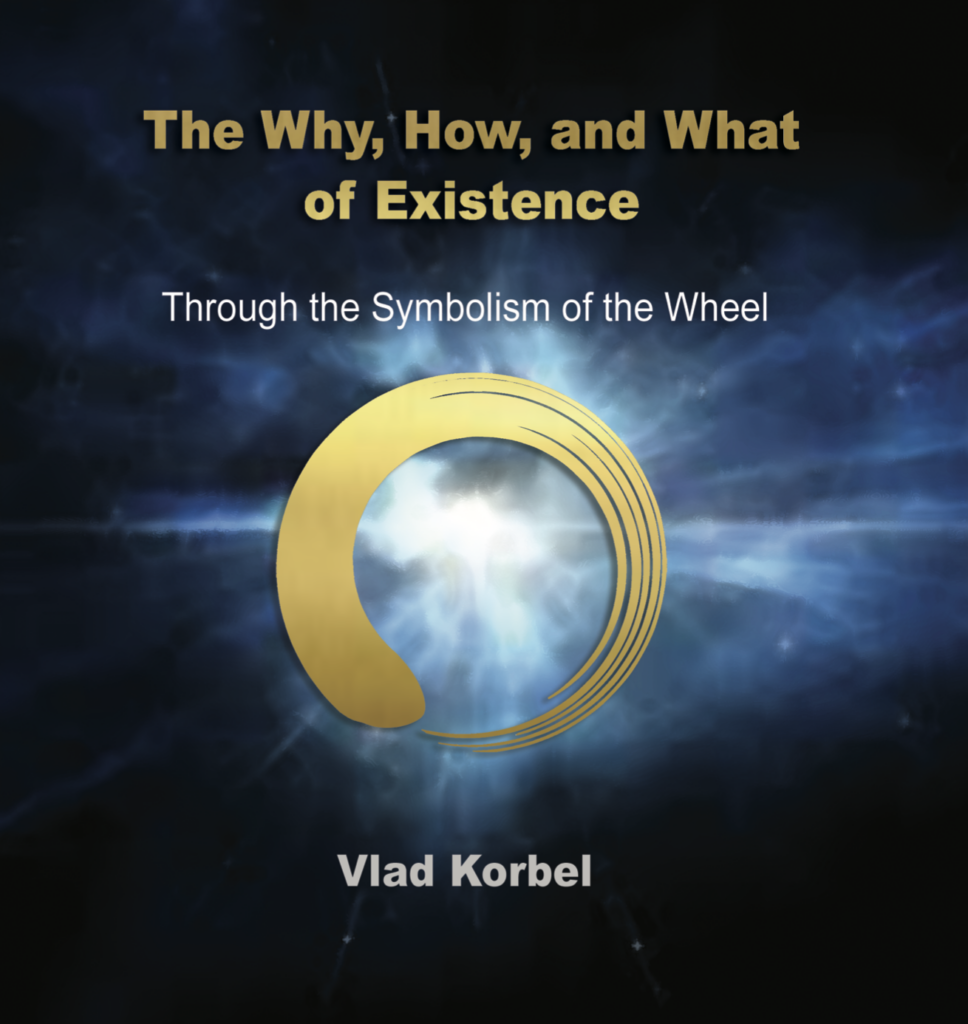
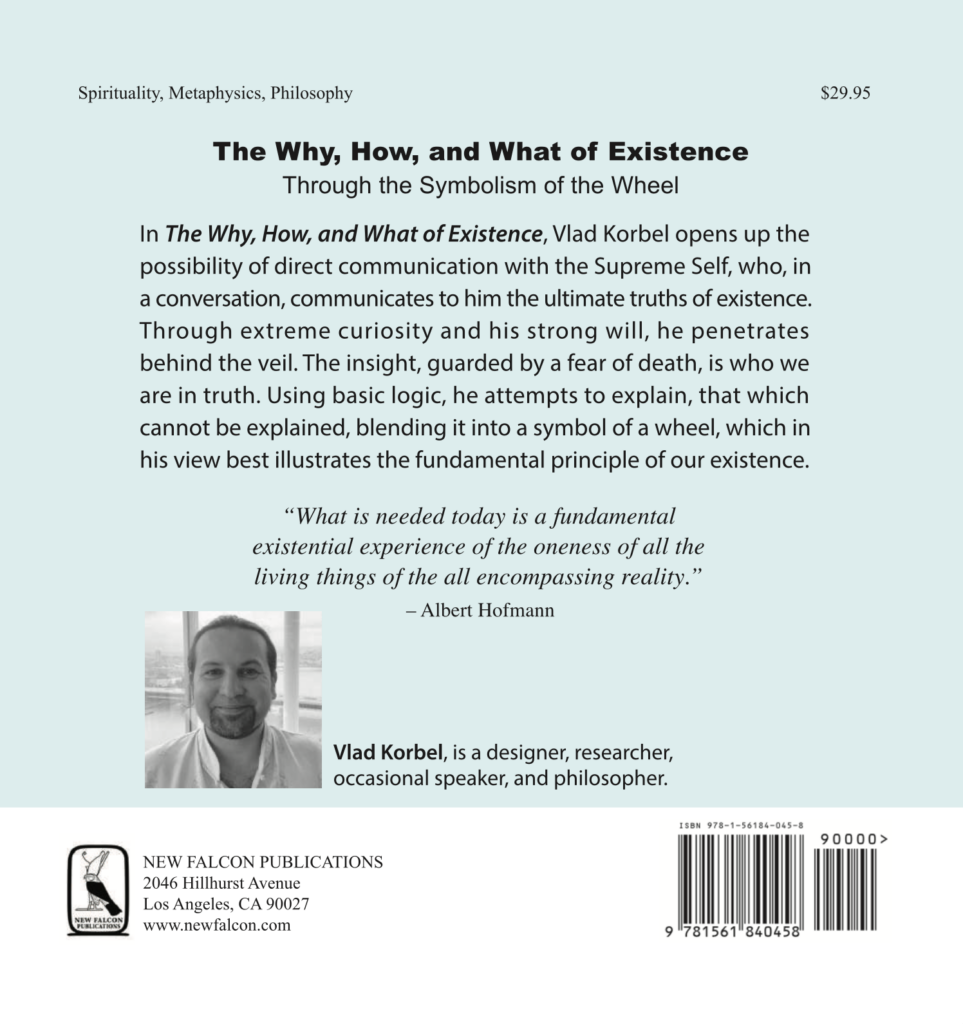
This parallels the climax of my book, The Why, How, and What of Existence.
There, I approach identity through neti neti (Adi Shankara’s concept), “not this, not that”:
“My name, title, and identity.
I am not.
“My body, environment, and possessions.
I am not.
“My experiences, achievements, actions, needs, and desires.
I am not.
“My Mind: That which thinks that I am not;
My soul which feels that I am not,
My destiny which determines that I am not.
– I am not.
Like Shuka’s abandonment of the gunas, this is not self-destruction. It is the removal of everything mistakenly taken to be the Self.
But the negation does not end in nothingness:
“The everlasting, omnipresent existence,
consciousness, and bliss;
“The Spirit beyond duality and oneness;
“The no-one, yet the Absolute.
I am.”
Shuka disappears, yet he does not become nothing.
He becomes one with everything.
What disappears is not consciousness, but its apparent confinement within one body, one name, and one location.
The Seeker and the Light
The experiential climax of my book describes the Supreme Self manifesting as a ray of light. I felt myself become one with it, moving through space in every direction. It turned, pointed at itself, and asked:
“Who am I?”
We both laughed, and I understood through love and tears that we were one.
I would not equate a temporary visionary experience with Shuka’s complete liberation. Yet the structural parallel is clear.
In both accounts, the distinction between the seeker and the sought collapses.
As long as it is “me, this separate person” who seeks Brahman, the journey continues around the circumference of the Wheel.
The climax comes when the question turns back upon the questioner.
The light being sought is revealed as the same consciousness through which the search has always taken place.
The Centre of the Wheel and the Secret of Unity
In my book, the Wheel represents unconditional love, emptiness, manifestation, death, rebirth, and liberation (Moksha).
At its circumference lies samsara: change, desire, identity, and movement between opposites.
At its centre is the One.
But the centre is not another place to which the individual travels. It is the unmoving reality present within every movement of the Wheel.
Shuka does not reach it as a separate observer. He becomes “one with everything,” present in the soul of everything and facing every direction.
This is why, when Vyasa calls for his son, Shuka does not reply from a mountain or heavenly world. The whole universe answers:
“Bho.”
Vyasa calls one person, but all existence replies.
The Taste and The Heart of Moksha
Shiva says that Shuka attained something difficult even for a god.
Heaven is not moksha.
Supernatural power is not moksha.
A visionary experience is not necessarily moksha — rather, it’s a temporary taste.
Even purity is not moksha.
Shuka does not become a more powerful being within existence. He becomes free from the limitation of being one particular being.
The heart of the passage is not that Shuka travelled elsewhere.
It is that there was no longer anywhere from which he was absent.
The separate Shuka disappears, but consciousness does not. The drop does not enter an alien ocean.
It discovers that it has always been water.
This is also the culmination of the Wheel in my book.
The journey begins with the individual asking why existence is here, how it moves, and what its purpose might be.
It ends when the one asking the question is absorbed into the answer.
When the Question becomes the Answer, and the many merge with the One.
When Vyasa called for his son, the universe replied.
The world had become his answer.
—
Salutations to the Infinite One of countless forms.
To all of us who still suffer under the illusion of separateness, I say:
“Bho.”
Leave a Reply