

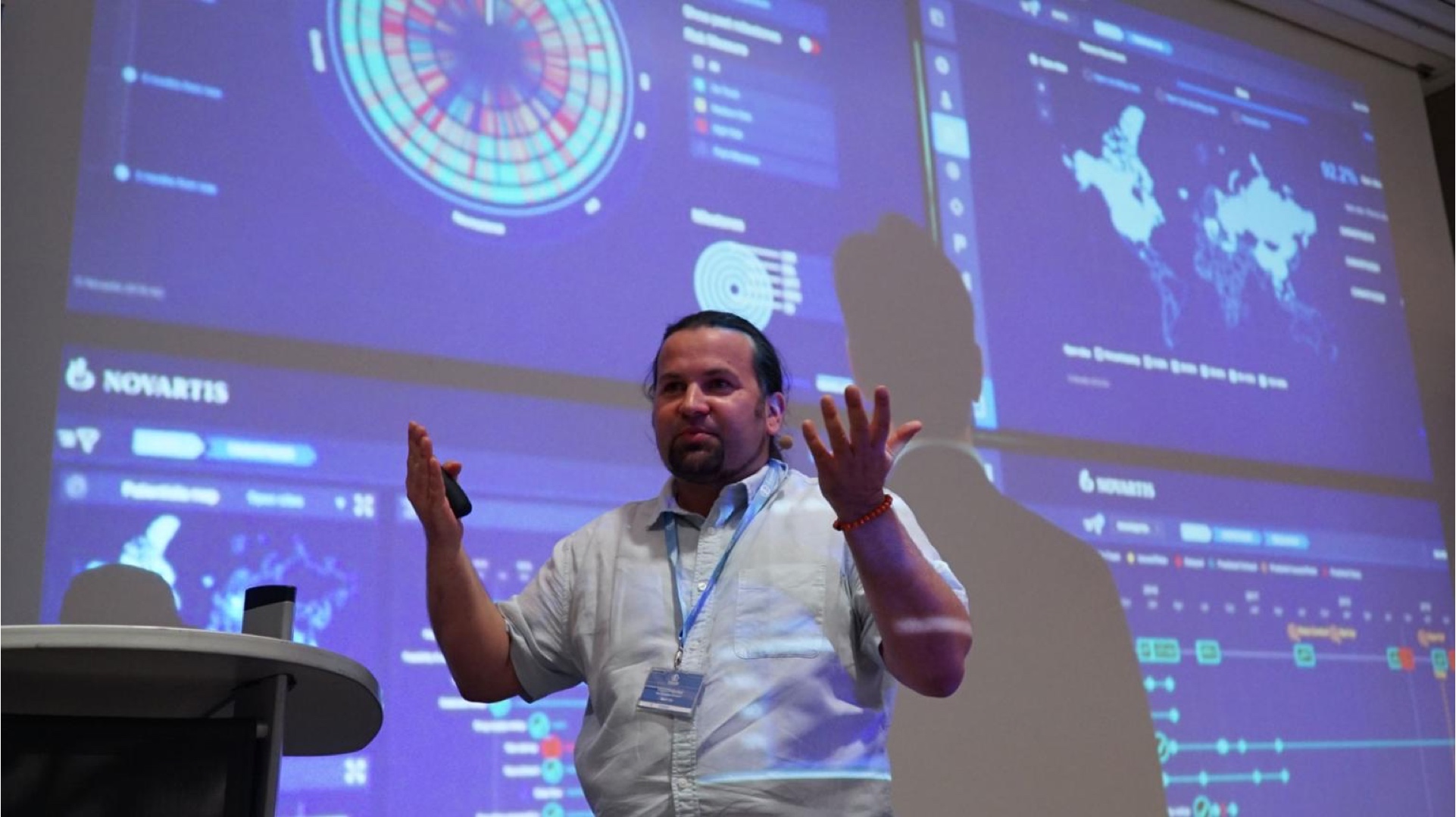
Between 2017 and 2022, we’ve been on a transformative journey—one that began with a business challenge and evolved into a symbol of innovation and purpose at the heart of drug development.
The Challenge: A Fragmented System
At the outset, clinical trial operations were highly reactive. Directors managed their studies using Excel spreadsheets, constantly navigating a maze of scattered data and inefficiencies. The system was prone to delays, miscommunication, and high costs.
The business had a vision: a control tower—a centralized digital platform to unify truth across the organization and predict future risks in clinical trials. This would enable proactive decision-making and improved efficiency. That’s where we, the design team, came in.
Starting with Empathy
Drawing from what I learned during my time at Stanford’s Innovation & Entrepreneurship Program, we started not with solutions, but with empathy. Our first step was to understand the people behind the processes—the clinical trial directors, data managers, project leads.
We began by interviewing 15 users, eventually expanding to 67 stakeholders across the global drug development ecosystem. This world is vast and complex, spanning multiple roles, regions, and layers of decision-making. Despite the intricacy, one theme consistently emerged: motivation rooted in compassion.
The Moment That Mattered
One story stood out—shared by Barry John, a clinical trial director in India. He spoke with pride about a colleague who had invented a smart diaper capable of early disease detection in infants. This innovation gave children a chance at life, and for Barry, that was a moment of true fulfillment.
When I asked him why this moment meant so much, his answer revealed something deeper: a profound emotional connection to the impact of his work. It wasn’t just about data or deadlines—it was about saving lives.
A Point of View Rooted in Purpose
We translated these insights into a powerful design point of view:
“As a clinical trial director, I need to feel that I’m helping patients because I am driven by compassion.”
From this, we framed our central design challenge:
How might we inspire our associates to feel great about their purpose?
Designing with Symbolism: The Wheel
Inspired by this sense of purpose, we explored multiple design directions. One concept stood out—a wheel. It wasn’t just a visual metaphor, but a philosophical one, drawing from Eastern wisdom:
- The center of the wheel represented “emptiness” in Hindu philosophy—a metaphor for compassion.
- The outer movement of the wheel echoed samsara, the cycle of death and rebirth.
- Our goal was to create a sense of moksha or enlightenment—clarity in decision-making and connection to purpose.
This wheel became central not only to the control center interface but also to a larger philosophy of compassionate innovation.
From Concept to Reality
Over time, the vision became tangible. We designed a fully interactive control center that visualized real-time clinical trial performance, highlighted risks, and projected future outcomes. Accessible on desktops and iPads, it empowered employees across the organization.
We invested over 70 hours in empathy research, ran 30+ prioritization sessions, and navigated immense complexity. Usability remained a top priority. And the results spoke for themselves.
Real Impact, Recognized Broadly
The control center sparked early and enthusiastic adoption. It became a lighthouse project, signaling the beginning of digital transformation within global drug development.
It was presented by our CEO, Vas Narasimhan, and recognized by Swiss national television and Bloomberg—a rare feat for internal innovation. Even Badri, the head of drug development operations, became one of its biggest champions.
What I Took Away
Looking back, this journey was about more than product design—it was a lesson in human-centered leadership. Three core principles I learned at Stanford guided me throughout:
- Be your true Self – Understand who you truly are.
- Think for yourself – Question assumptions, avoid dogma.
- Always be a beginner – Stay curious. Approach problems with fresh eyes.
These principles shaped our approach and helped us build something not only functional, but meaningful—a tool that unites science, emotion, and purpose.


Leave a Reply