People can fly. No, I do not mean that our bodies suddenly defeat gravity, or that we have actual wings. I mean something more interesting. I mean that a human being can stop identifying only with this little point called me – this body, this name, this history – and experience consciousness as something much larger. If all consciousness is one, then the deepest part of us is not only here. It is everywhere.
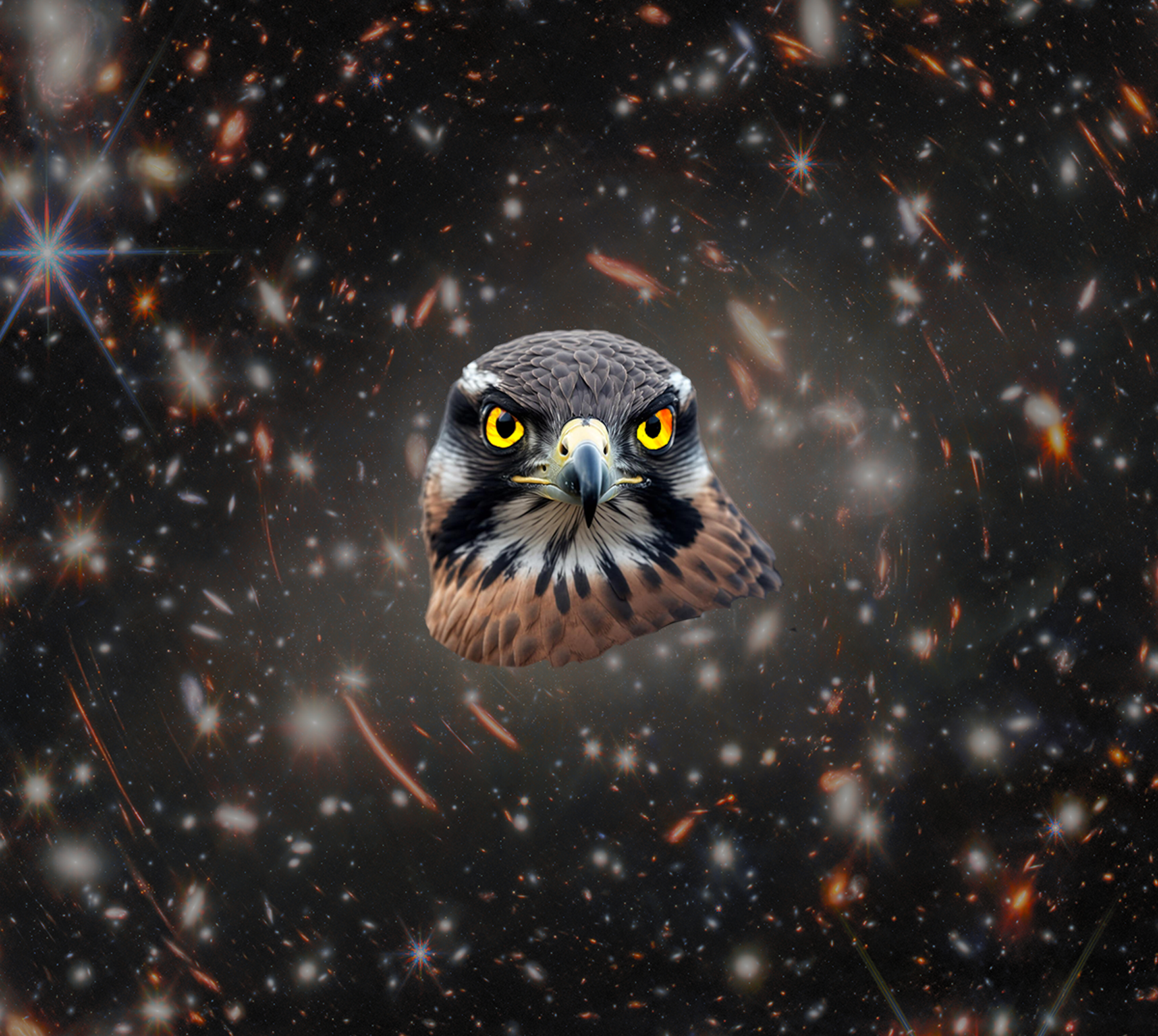
The image of flight is ancient. Horus appears as a falcon, the bird of the sky and divine kingship. The Egyptian ‘ba’ was also shown as a human-headed bird and could move beyond the ordinary limits of the body and tomb. For thousands of years, flight has been one of our symbols for crossing the ordinary human boundary.
Hermes Trismegistus, the legendary Hellenistic figure formed by combining the Greek god Hermes and the Egyptian god Thoth, goes much further. In Corpus Hermeticum XI, the seeker is told that if he wants to understand God, he has to make himself equal to God, because like is known by like. He must become higher than all heights, lower than all depths, bring the opposites together and, finally, think of himself as being everywhere at once. That line is the key to this article. What would it mean to be everywhere at once? It cannot mean moving the body very fast from Prague to India, or to Mars. If you are truly everywhere, there is nowhere left to go.
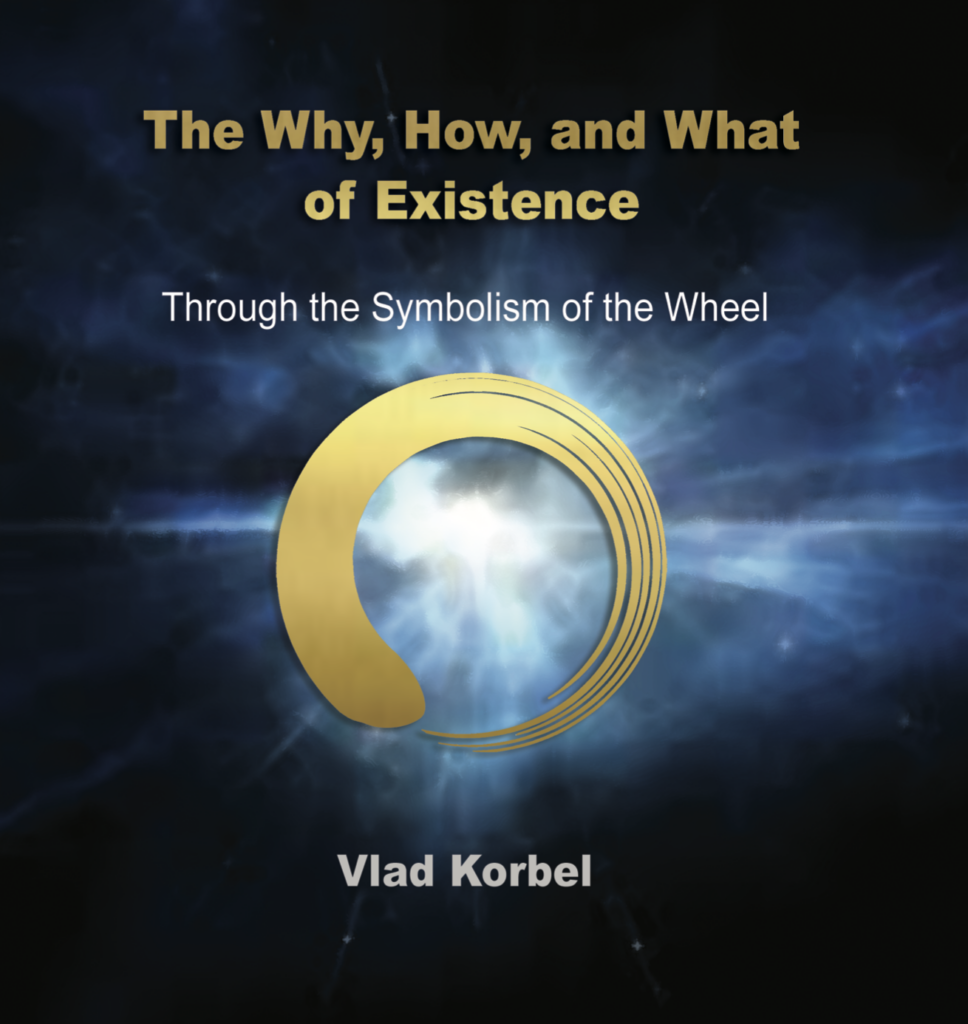
I wrote about something very similar in The Why, How, and What of Existence. During one of my journeys of inquiry to what I called the Supreme Self, I experienced myself as one with a ray of light and described being able to fly through space in all directions I wanted. At the end, the question came back: Who am I? The answer was not another name. The answer was the recognition that the small self and the Source were not two. That experience is the real origin of People Can Fly for me.
I am quite frankly tired of the word awareness and how often it gets reduced to passive observation. Awareness can still leave an observer on one side and the world on the other. That is not the point. The point is identity. I am the ocean. That is the jump I am interested in: not to be aware of oneness, but to truly be it.
The same logic is beautifully expressed by the Thousand Names of Vishnu, the sacred Hindu text from the Mahabharata. The names are many; Vishnu is one. The forms are many; the Source is one. If the One appears as the many, then moksha is not about travelling somewhere else. The apple does not have to travel back to the tree. It has to understand that it never stopped being the tree.
This brings me to religion. Religions do not begin with theology books. They begin with experience. Somebody experiences something. Somebody sees or hears something. Somebody receives a revelation, wakes up, enters the void, meets God, or becomes one with everything. Then the witness comes back and tries to explain what happened using the language and symbols available at the time. The words become scripture. Scripture becomes doctrine. Doctrine becomes institution. Eventually, millions of people can end up fighting about an experience they never had.
That does not make religion false. It makes the original experience more important than the institution built around it. Lao Tzu, the Buddha, Jesus, Muhammad, the authors of the Upanishads, Hermetic writers and indigenous shamans did not leave us one identical theology. Why should they? If the experience passes through a human mind, every witness brings back an interpretation shaped by language, culture and personality. What matters is that their testimony can point us toward the experiment.
This is where Timothy Leary’s slogans matter: Think for yourself, question authority, make your own religion. I would add: question the questioner too. Question Lao Tzu. Question Leary. Question the priest. Question the scientist. Question me. But do not stop at questioning. Go and investigate. Be Lao Tzu yourself. Become the witness instead of spending your life repeating somebody else’s testimony.
A book can tell you that honey is sweet. A laboratory can describe its chemistry. A thousand people can write poems about it. But there is one kind of knowledge that only comes when you taste it. Mystical experience is like that. Reading about Tat Tvam Asi – You are That – is one thing. Experiencing the disappearance of the small self and finding the whole on the other side is another. In my book I summarized my own conclusion very simply: all consciousness is one, which is the central conclusion of the ancient non-dual traditions of India, but at the same time a conclusion one makes through an experience.
A skeptic can say: this is the brain. Fine. Then investigate that too. Neuroscience may tell us what changes in the brain when the sense of self disappears, but mechanism and meaning are not the same question. My point is not that everyone must come back with my interpretation. My point is that it is weak to accept or reject the territory without ever leaving the map.
So the method is simple: investigate for yourself. The doors are many. The psychiatrist Stanislav Grof, who spent decades studying such states, grouped them broadly: ancient shamanic practices like drumming, chanting and fasting; the meditative and contemplative disciplines of the great traditions; breath-based therapies; laboratory methods; psychedelics in guided clinical settings; and spontaneous experiences that simply arrive uninvited. The door matters less than walking through it.
Come back with your own interpretation. Maybe you will call it God. Maybe Brahman, Shiva, Vishnu, Tao, emptiness, the higher Self, the Source, or simply consciousness. Maybe you will conclude that it was only a remarkable state of the brain. Good. At least then it is your conclusion, grounded in your own encounter, rather than borrowed certainty.
And this is where People Can Fly returns to moksha. When the small self disappears, there is no longer a little someone trying to get from here to there. If what remains is the One, then all directions are already contained within it. You do not fly because you have learned how to go everywhere. You fly because you discover that who you fundamentally are was never only somewhere, but everywhere. You are not someone; you are no one, and everyone.
And then you land. Because after flight comes the return — to the community, the town, the office. Nothing outside has changed, yet everything has. You no longer act from the perspective of the little me, defending its borders and counting its rewards, but from the One that looks out through every pair of eyes. Compassion stops being a commandment; it becomes common sense, the way you would not strike your own hand. The personality is still there, but now it serves a higher purpose instead of ruling. And the test of whether you truly flew is not how high you went, but how kindly you walk once you are back on the ground.
Sources
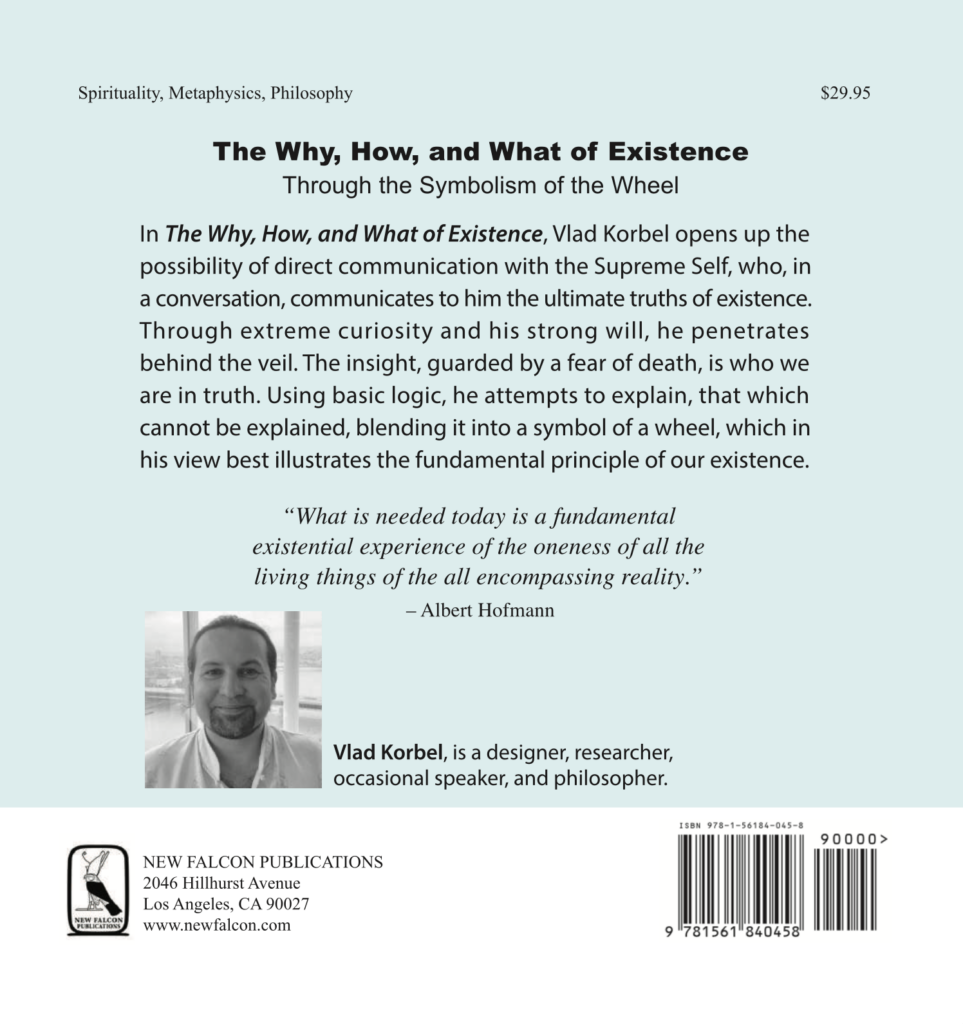
• Korbel, Vlad. The Why, How, and What of Existence: Through the Symbolism of the Wheel. Los Angeles: New Falcon Publications, 2022. See especially pp. 8–13, 18–19, 25–27.
• The Metropolitan Museum of Art. “Statue of Horus as a Falcon Protecting King Nectanebo II.” Late Period, 360–343 BCE, accession no. 34.2.1. Accessed October 1, 2026. metmuseum.org/art/collection/search/544887.
• British Museum. “Papyrus: Book of the Dead of Ani,” EA10470,3. Collection Online. Accessed October 1, 2026. britishmuseum.org/collection/object/Y_EA10470-3.
• Hermes Trismegistus. “Corpus Hermeticum XI,” §§19–20. In Hermetica: The Greek Corpus Hermeticum and the Latin Asclepius in a New English Translation, with Notes and Introduction, translated by Brian P. Copenhaver, 37–42, esp. 41. Cambridge: Cambridge University Press, 1992.
• Laozi. Tao Te Ching, chap. 1. Translated by D. C. Lau. Harmondsworth: Penguin Books, 1963.
• Vyasa. The Mahabharata of Krishna-Dwaipayana Vyasa, Book 13, Anusasana Parva, sec. 149 (Vishnu Sahasranama). Translated by Kisari Mohan Ganguli, 1883–1896.
• Olivelle, Patrick, trans. Upaniṣads. Oxford: Oxford University Press, 1996. See Chāndogya Upaniṣad 6.8.7 (“tat tvam asi”).
• Leary, Timothy. How to Operate Your Brain. Directed by Joey Cavella and Chris Graves. Retinalogic, 1994. Video. (“Think for yourself. Question authority.”)
• Leary, Timothy. Start Your Own Religion. Berkeley, CA: Ronin Publishing, 2009. Originally published by the League for Spiritual Discovery in the 1960s.
• Jacobson, Sid. “A Conversation with Dr. Timothy Leary.” Alternatives, November–December 1992; repr. Anchor Point, August 1996 and November 2003. Interview transcript, esp. p. 11.
• Grof, Stanislav. Psychology of the Future: Lessons from Modern Consciousness Research. Albany: State University of New York Press, 2000. See chap. 1.
Leave a Reply